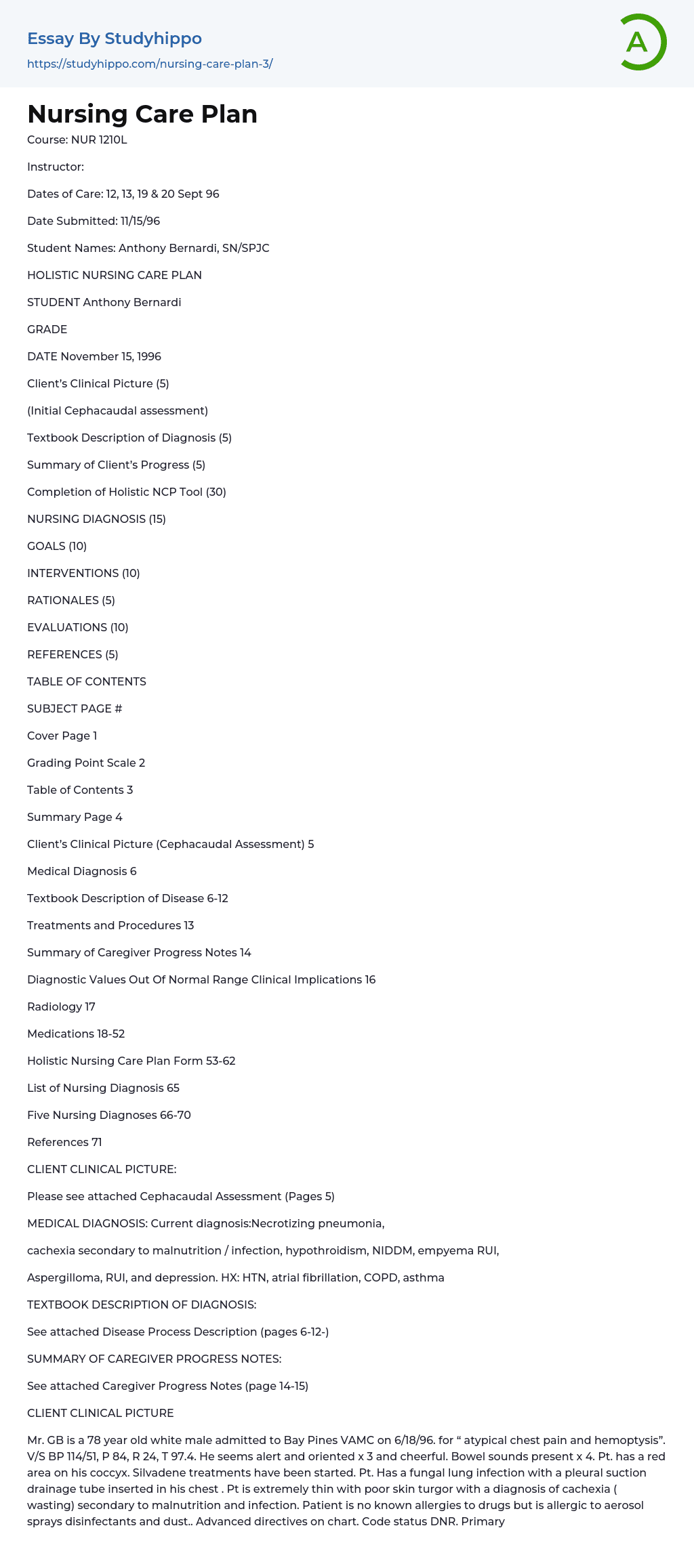
CLIENT CLINICAL PICTURE
Mr. GB is a 78 year old white male admitted to Bay Pines VAMC on 6/18/96. for “ atypical chest pain and hemoptysis”. V/S BP 114/51, P 84, R 24, T 97.4. He seems alert and oriented x 3 and cheerful. Bowel sounds present x 4. Pt. has a red area on his coccyx. Silvadene treatments have been started. Pt. Has a fungal lung infection with a pleural suction drainage tube inserted in his chest . Pt is extremely thin with poor skin turgor with a diagnosis of cachexia ( wasting) secondary to malnutrition and infection. Patient is no known allergies to drugs but is allergic to aerosol sprays disinfectants and dust.. Advanced directives on chart. Code status DNR. Primary physician Dr. R, Thoracic surgeon Dr. L. Psychology Dr.W. There
...is PT, OT Dietary and Infectious Disease consults when necessary. He lives with his wife who he has been married to for 56 years. His son and his daughter come to visit him. He does not smoke. He wears dentures but did not bring them. He dose not use a hearing aid but he does have a hearing deficit.
Pt. is able to do all his ADL’s with limited assistance. He wants to get better and leave the HSP. Pt. Stated’ 90 days is to long to be here”. Pt. States that he is concerned about caring for his tube site when he goes home and does not feel that his wife can do this for him.
Diet: Pureed Hi protein, low fat, anti-dumping with Calorie count (all meals) and drink supplements between meals. TPN @ 79cc/hr 12hr around the clock through PICC line
MEDICAL DIAGNOSIS:
Empyema, Hemoptysis, Necrotizing pneumonia, Aspergillosis (Aspergillus fumigatus) cachexia secondary to malnutrition/infection, hypothyroidism, Diabetes Type II melitius , and depression.
PATHOPHYSIOLOGY
HEMOPTYSIS: Expectoration of blood arising from the oral cavity, larynx, trachea, bronchi or lungs (Tabor’s, 17th ed. 1989 p.879)
CACHEXIA SECONDARY TO MALNUTRITION/INFECTION : The state of ill health, malnutrition, and wasting It may occur in any chronic diseases, certain malignancies and advanced pulmonary tuberculosis. (Tabor’s, 17th ed. 1989 p.287)
NECROTIZING PNEUMONIA: Aspiration pneumonia. Aspiration pneumonia is frequently called necrotizing pneumonia because of the pathologic changes in the lungs. It usually follows aspiration of material in the mouth into the trachea and subsequently the lungs. The aspirated material. Either food, water, or vomitus, is the triggering mechanism for the pathology of this type of pneumonia. If the aspirated material is an inert substance (e.g. barium or nonacid stomach contents), the initial manifestation is usually caused by obstruction of airways. When the aspirated materials contain gastric acid, there is chemical injury to the lung parenchyma with infection as a secondary event usually 48 to 72 hours later.
The infecting organism is usually one of the normal oropharyngeal flora. The clinical manifestations proceed as those of a classic pneunococcal or streptococcal pneumonia. Fungi may also be a cause of pneumonia. These infections are not transmitted from person to person, and the patient does not have to be placed in isolation. The clinical manifestations are similar to those of bacterial pneumonia. Skin and serology tests are available to assist in identifying the infecting organism. However, identification of the organism In a sputum specimen or in other body fluids is the best diagnostic indicator. (Lewis, S.M. & Collier, p. 643-644)
ASPERGILLOSIS INFECTIONS : There are
several forms of Aspergillosis infections. All are caused by one or more of the many different Aspergillus fungus species; only a few of these organisms are capable of producing disease in humans. These species are spread through the air and can be found almost any place in the world. Because these spores are inhaled, they usually affect the lungs or other airway passages such as the bronchial tubes, nose and sinuses. The fungi can be invasive, affecting any tissue, mucous membrane or vital organ of the body.
Allergic Bronchopulmonary Aspergillosis (ABPA) is an immune disorder that occurs in people with asthma or chronic obstructive pulmonary disease (COPD) infected with Aspergillosis fungi. It causes an excess of certain white blood cells (eosinophils), an infiltration of the lungs, and impaction of the bronchial tubes with eosinophils and Aspergillus organisms. Symptoms of this disease may consist of fever, shortness of breath (dyspnea), chest pain, wheezing, a cough with sputum (with or without blood) or a generalized feeling of ill-health (malaise). This form of Aspergillosis is not usually invasive, but it can lead to a chronic dilation of the bronchial tubes (bronchiectasis).
Pulmonary Mycetoma, also known as Aspergilloma or fungus ball, is a form of Aspergillosis that often occurs as a result of the Aspergillus fungus growing together (colonization) in a cavity of the lungs. These cavities are usually caused by other pulmonary diseases such as tuberculosis, sarcoidosis, histoplasmosis or coccioidomycosis. The fungus ball can be seen on x-rays. This form of Aspergillosis is characterized by a chronic cough, weight loss, a generalized feeling of ill-health (malaise) and the spitting up of blood (hemoptysis).
Fulminative or Invasive Aspergillosis is another form of
this disorder that can cause distribution of the Aspergillus fungus to other parts of the body. This disease can progress from a localized infection to a widespread erosion and ulceration of the bronchial system and an inflammation of the vascular system (vasculitis). Vasculitis is a narrowing of the inside of a blood vessel that can obstruct the flow of blood to the tissues. This lack of blood can cause damage to the tissues (necrosis), and a possible formation of blood clots (thrombosis).
Invasive Aspergillosis is usually first confined to the lungs but it can spread through the blood to other organs especially the liver, brain, kidneys, skin, gastrointestinal tract and other sites. This can be a very serious disease which can have a slow or rapid course. It is seen in those whose immune system has been weakened by other illnesses, especially people with cancer (e.g., Leukemia, Hodgkin's Disease), kidney transplant patients or those undergoing certain drug therapies.
Occasionally, Aspergillosis can cause Infective Endocarditis which is an infection of the inner lining of the heart muscle (endocardium). A type of infective endocarditis, prosthetic valvular endocarditis (PVE), may develop in patients who have previously had artificial (prosthetic) heart valve replacement. This infection may occur as a result of contamination of the operating room area by the Aspergillus spores. Drug addicts are also more susceptible to this form of Aspergillosis.
Mycetoma, also known as Madura Foot, is a chronic infection produced by Aspergillosis as well as several other fungi. It is a progressive fungal disease that is characterized by lesions of the foot, face, trunk, hand or leg. These lesions can cause swelling, hardening, pus formation, sinus drainage and abscesses
that can lead to bone destruction and deformities. It is more commonly seen in tropical climates.
Aspergillosis is a group of infectious diseases that are caused by the inhalation of the Aspergillus fungus. The spores that cause these infections can be found in decaying vegetable matter, grains, grass, leaves, soil, wet paint, air conditioning systems, on refrigerator walls and in construction and fireproofing materials. It is not known why most people resist infection from this common fungus, and why others are more susceptible to infection. A weakened immune system, or an abnormal immune response to the fungus, may cause the fungus to proliferate and become a threat to one's health.
Aspergillosis is a rare disorder that affects males and females in equal numbers. It is seen more often in those people who have chronic respiratory problems or whose immune system has been weakened by other serious illnesses or drug therapy.
DEPRESSION: Depression is the most common functional disorder. Signs of depression include sadness, low energy, diminished memory and concentration, sleeping disturbances, appetite disturbance, with withdrawal, irritability, alcohol abuse, expressed feelings of helplessness and hopelessness, apathy, impaired attention span, and expression of suicidal wishes. Depression is often treatable and reversible through use of antidepressant medications and counseling. (Brunner/ Suddarth, 1988)
HYPERTENSION: Hypertension can be defined arbitrarily as persistent levels of blood pressure in which the systolic pressure is above 140 mm Hg and the diastolic pressure is above 90 mm Hg. In the elderly population, hypertension is defined as systolic pressure above 160 mm Hg and diastolic pressure above 90 mm Hg. Hypertension is a major cause of heart failure, stroke, and kidney failure. It is called the “silent killer”
because the person who has it is often symptom free.
Gerontological Considerations: Changes in the peripheral vascular system are responsible for the changes in blood pressure that occur with age. As the age related process of atherosclerosis evolves, the ability of the vessels to distend and recoil is reduced. Consequently, the aorta and large arteries are less able to accommodate the ejected stroke volume, and a decrease in cardiac output and increase in peripheral resistance result. Systolic blood pressure increases as a result of the increased peripheral resistance, and pulse pressure widens subsequent to the diastolic fall that accompanies reduced distensibility of the aorta. The risk factors for high blood pressure that are present in the population in general continue into old age. These are approximately the same for elderly men and women. (Brunner/ Suddarth, 1988)
CHRONIC OBSTRUCTIVE PULMONARY DISEASE : Chronic obstructive pulmonary disease (COPD) is the most common cause of death and disability due to lung disease in the United States. COPD is a broad classification that includes a group of conditions associated with chronic obstruction of air flow entering or leaving the lungs. Airway obstruction is diffuse airway narrowing, causing increased resistance to air bronchiectasis, emphysema, and asthma. Basically, the person with COPD has
- excessive secretion of mucus within the airways not due to specific causes (bronchitis or bronchiectasis),
- an increase in the size of the air spaces distal to the terminal bronchioles with loss of alveolar walls and elastic recoil of the lungs (emphysema),
- narrowing of the bronchial airways that varies in severity (asthma).
As a result there is a subsequent derangement of airway dynamics for example, loss of elasticity and obstruction of air
flow. There is often an overlap of these conditions. (Brunner/ Suddarth, 1988 )
ASTHMA : Asthma is an intermittent, reversible, obstructive airway disease characterized by increased responsiveness of the trachea and bronchi to various stimuli. This results in narrowing of the airways, causing dyspnea This narrowing of the airway changes in degree, either spontaneously or because of therapy. Asthma differs from other obstructive lung diseases in that it is a reversible process, and patients may exhibit no symptoms for a prolonged period of time. Asthma is a reversible diffuse airway obstruction. The obstruction is caused by one or more of three developments:
- contraction of muscles surrounding the bronchi, which narrows the airway
- swelling of membranes that line the bronchi
- filling of the bronchi with thick mucus.
In addition, there is bronchial muscle enlargement, mucous gland enlargement, thick, tenacious sputum, and hyperinflation or air trapping in the alveoli but most of what is known involves the immunologic system and the autonomic nervous system. (Brunner/ Suddarth, 1988
ATRIAL FIBRILLATION: Atrial fibrillation (disorganized and uncoordinated twitching of atrial musculature) is usually associated with atherosclerotic heart disease, rheumatic heart disease, CHF, thyrotoxicosis, or pulmonale, or congenital heart disease. Atrial fibrillation is characterized by the following- lowing: Rate: An atrial rate of 350 to 600 beats per minute ventricular response usually 120 to 200 beats per minute. P waves: No discernible P waves: irregular undulation, termed fibrillary or “f” waves, is seen; PR interval cannot be measured. QRS complex: Usually normal. Conduction: Usually normal through the ventricles.
Characterized by an irregular ventricular response, because the AV node is incapable of responding to the rapid atrial rate. Impulses that are transmitted cause the ventricles to
respond irregularly. Rhythm: Irregular and usually rapid, unless controlled. Irregularity of rhythm is due to concealed conduction within the AV node. A rapid ventricular response reduces the time for ventricular filling and hence the stroke volume. The atrial kick, which is 25 to 30% of the cardiac output, is also lost. Congestive heart failure frequently follows. There is usually a pulse deficit, the numerical difference between apical and radial pulse rates.
Treatment is directed toward eliminating the cause, decreasing the atrial irritability, and decreasing the rate of the ventricular response. In patients with chronic atrial fibrillation, anticoagulant therapy may be used to prevent thromboemboli from forming in the atria. Drugs of choice to treat atrial fibrillation are similar to those used in the treatment of paroxysmal atrial tachycardia, digitalis preparation is used to slow the heart rate, and an antidysrhythmic such as quinidine is used to correct the dysrhythmia. (Brunner, & Suddarth 1988).
TYPE II DIABETES MELLITUS: In diabetes, insulin is not secreted in proportion to blood glucose levels because of several possible factors: deficiency in the production of insulin by the beta cells, insensitivity of the insulin secretory mechanism of the beta cells, delayed or insufficient release of insulin, or excessive inactivation by chemical inhibitors or “binders” in the circulation. In some non-insulin dependent persons with diabetes, however, insulin secretion is increased, resulting in higher , circulating insulin levels. Although excess insulin is present, it is not utilized because of an inadequate number of insulin receptors present on cells. This mechanism has been
observed in obese patients. With weight loss, the number of insulin receptors on the cells increases, thereby allowing glucose to enter the cell. This
may result in return of a normal glucose tolerance. (Burner/ Suddarth, 1988 )
HYPOTHYROIDISM : Hypothyroidism is a condition in which there is a slow progression of thyroid hypofunction, followed by symptoms indicating thyroid failure. More than 95% of patients with hypothyroidism have primary dysfunction of the thyroid gland itself. When the thyroid dysfunction is due to failure of the pituitary gland, it is known as secondary hypothyroidism; when failure of the hypothalamus is the underlying cause, the term tertiary hypothyroidism is used. When thyroid deficiency is present at birth, the condition is known as cretinism. In such instances, the mother may also suffer from thyroid deficiency. (Brunner/ Suddarth, 1988)
TREATMENTS AND PROCEDURES
Patients activity orders are as tolerated with wheel chair transport. Pt needs partial assist with ADLs. He is continent of B & B with assistance
Needs to be turned in bed Q 2 hr, elevate heels in bed . Pt has a special mattress.
Encourage I.S. Q 1 hr w/a. IV flush q shift peripheral line. PICC line flush.
Chest tube to water seal to 20cm, with cont. suction 55-60 wall green.
Chest tube dressing change no deviations from present form.
Accurate I&O’s . VS. Q shift and prn. with lung sounds assessment. Skin assessment q 2 hr with wound assessment at the same time(abrasion on the back ) and finger ulceration. FSGs q 6 hr with Sliding scale coverage. Weight every week on Monday.
SUMMARY OF CARE GIVER NOTES:
All times are approximate
07:30 Received report on G.B. from night shift.
08:00 Spoke with G.B. before breakfast was delivered. Vital signs taken and noted. Insured patency of chest drainage tubes and amount of fluid from last shift. Noted time and initialed on collecting
container.
09:00 09:00 medications given and noted
09:30 Assisted G.B. with ADL’s. Pt stated that he wasn’t very hungry. Pt. Ate only 25% of solid food. Noted intake of 250ml. Urine output after breakfast 225ml. Pt. Performed own bed bath and oral care. Lotion applied to Pt. Pt. Helped into bedside commode. Curtains drawn for privacy.
10:30 Dressing change on tube insertion site as ordered. Skin assessment done and lung sounds checked. Check position of G.B. He had re-positioned himself for comfort
10:45 X-Ray of G.B. performed in room. G.B. dressed and assisted into wheel chair.
11:00 Reported pt status to Team Leader.
11:00 Documented morning activities in appropriate charts, i.e. Nsg Notes, treatment book and V/S charts.
11:15 Returned to room to interview G.B. . Pt was cheerful but stated that he was feeling tired and wanted to be helped back into bed.
11:45 Noted I & O
12:00 G. B. In bed resting comfortably. Reported pt status to team leader and report off floor to post-conference.
DIAGNOSTIC VALUES OUT OF NORMAL RANGE CLINICAL IMPLICATIONS
BUN 32H 10-26 A. Increased BUN levels (azotemia) 1. The most common cause of increased BUN level is inadequate excretion due to kidney disease or urinary obstruction, frequently- : occurring in cases of prostate enlargement. (A) An increased BUN of 50 to 150 mg / 100 ml indicates serious impairment of renal function. (Fishbach p. 312)
Creatinine .5H 0.7-1.4 A disorder of kidney function reduces excretion of creatinine, resulting in increased levels of blood creatinine. The test is used to diagnose impaired renal function. It is a more specific and sensitive indicator of kidney disease than BUN, although in chronic renal disease, BUN correlates more accurately with symptoms of uremia than
does the blood creatinine.( (Fishbach p. 312)
WBC 10.4H 5-10 A. Leukocytosis (white blood cell count above l0000 / gl) 1. Leukocytosis is usually due to an increase of only one type of White cell and is given the name of the type of cell that shows white cell and is given the name of the type of cell that shows the main increase. .In increase in circulating leukocytes is rarely due to a proportional increase in leukocytes of all types. When it occurs it is usually to hemoconcentration. Leukocytosis occurs in acute infections in which the degree of increase of white cells depends on, 1. The severity of the infection, 2. The patient’s resistance, 3. The patient’s age.(Fishbach p. 25.)
RBC 2.96L 4.2-5.6 Decreased RBC Values . Anemia, a condition in which there is a reduction in the number of circulating RBCs, in the amount of hemoglobin, and/or in the volume of packed cell(hematocrit).(Fishbach p. 41)
HGB 10.L 13.1-17.2 Anemia
HCT 29.3L 39-50 decreased hematocrit values are an indicator of anemia. In hematocrit of 30 or less means the patient is moderately to severely anemic.
ALBUMIN 3.1l 3.9-5 decreased albumin levels severe hypoalbuminemia is often associated with edema and decreased transport function such as hypocalcemia. Decreased albumin levels are caused by many different conditions i.e. Nephrosis (Fishbach p. 363)
LY# 1.2L 1.8-2.6 Anemia
MCH 34H 26-34 An increase of the MCH is associated with macrocytic anemia.
MCV 99.2H 87 -103 Note VA values differ from Fishbach. F the MCV is greater than 103 mm3, the red cell 5 are macrocy tic.
PLT 433H 150-350 Abnormally increased numbers of platelets (thrombocythemial thrombocytosis) occur in iron-deficiency and posthemorrhagic anemia acute infections and many other diseases.
In 50% of those patients who exhibit an unexpected increase in plate- lets, a malignancy will be found. This malignancy is usually disseminated, advanced, or inoperable.
MPV 6.3L 8 -10L This test is done in the investigation of various hematologic disorders such as thrombocytopenic purpura, and study of alcoholics under treatment.
Na+ 135 135-148 Hyponatremia usually reflects a relative excess of body water rather than a low total body sodium.
K 4.6 2.7-4.5 Hyperphosphatemia (increased phosphorus levels) The most common causes of elevated blood phosphate levels are in association with kidney dysfunction and uremia. This is because phosphate is so closely regulated by the kidneys. Renal insufficiency and severe nephritis (accompanied by elevated- : BUN and creatine)
Albumin 3.1 3.8-5.0 albumin is a protein that is formed in the liver and that helps to maintain normal distribution of water in the body (colloidal osmotic pressure). It also helps in the transport of blood constituents such as ions, pigments, bilirubin, hormones, fatty acids, enzymes, and certain drugs. Decreased albumin levelsDecreased albumin levels are caused by many different conditions- inadequate iron intake, Severe liver diseases Malabsorption, Starvation, excessive administration of IV glucose in water
RADIOLOGY
F/Y empyema status no change since 9/3/96. F/U - bilateral sever pulmonary emphysema & interstitial fibrosis. CBC shows high levels of WBC’s and bends indicative of ongoing infection. Chemistry shows elevated liver enzymes. UA and C&S are negative. Blood cultures are also negative. Sputum C&S and Gram Stain show WBC* 25, Eph.*10 and presence of Alpha streptococcus & neisseria.
LABS AND X-RAYS: CXR done on 9/3 shows normal heart size, no change in the status of pulmonary fibrosis, emphysema but there is new fluid in R major fissure. Echo
done 7/22 reveals L ventricular systolic dysfunction and ejection fraction of 31%. ECG done 7/29 shows Arterial Fibrillation. CT-scan of chest is ordered.
MEDICATIONS
ALBUTEROL
Albuterol, Proventil, Proventil Repetabs, Salbutamol, Ventolin, Ventolin Rotacaps, Volmax
Func. class.: Adrenergic b2 agonist
Action: Causes bronchodilation by action on b2 (pulmonary) receptors by increasing levels of cAMP, which relaxes smooth muscle; produces bronchodilation, CNS, cardiac stimulation, as well as increased diuresis and gastric acid secretion; longer acting than isoproterenol
Uses: Prevention of exercise-induced asthma, bronchospasm, production of premature labor
Dosage and routes:
To prevent exercise-induced asthma
- Adult: INH 2 puffs 15 min before exercising, NEB/LPPB 5 mg tid-qid
Bronchospasm
- Adult: INH 1-2 puffs q4-6h PO 2-4 mg tid-qid, not to exceed 8 mg
Prevention of premature labor
Available forms: Aerosol 90 mg/actuation; tabs 2, 4 mg; syr 2 mg/5 ml, cont rel 4, 8 mg
Side effects/adverse reactions:
CNS: Tremors, anxiety, insomnia, headache, dizziness, stimulation, restlessness, hallucinations, flushing, irritability
EENT: Dry nose, irritation of nose and throat
CV: Palpitations, tachycardia, hypertension, angina, hypotension, dysrhythmias
GI: Heartburn, nausea, vomiting
MS: Muscle cramps
Contraindications: Hypersensitivity to sympathomimetics, tachydysrhythmias, severe cardiac disease
Precautions: Lactation, pregnancy , cardiac disorders, hyperthyroidism, diabetes mellitus, hypertension, prostatic hypertrophy, narrow-angle glaucoma, seizures, exercise-induced bronchospasm (aerosol) in children *12 years
Pharmacokinetics:
Well absorbed PO, extensively metabolized in the liver, excreted in urine, crosses placenta, breast milk, blood-brain barrier
PO: Onset hr, peak 2 hr, duration 4-6 hr, half-life 2 hr
PO-ER: Onset hour; peak 2-3 hr; duration 12 hr
INH: Onset 5-15 min, peak 1-1 hr, duration 4-6 hr, half-life 4 hr
Interactions/incompatibilities:
- Increased action of aerosol bronchodilators
- Increased action of albuterol: tricyclic antidepressants, MAOIs, other adrenergics
- May inhibit action of albuterol: other b-blockers
NURSING CONSIDERATIONS
Assess:
- Respiratory function: vital capacity, forced expiratory volume, ABGs, lung sounds, heart rate and rhythm (baseline)
- That patient has
not received theophylline therapy before giving dose
Administer:
- After shaking, exhale, place mouthpiece in mouth, inhale slowly, hold breath, remove, exhale slowly
- Gum, sips of water for dry mouth
- PO with meals to decrease gastric irritation
- Syrup to children (no alcohol, sugar)
Perform/provide:
- Storage in light-resistant container, do not expose to temperatures over 86 F (30 C)
Evaluate:
- Therapeutic response: absence of dyspnea, wheezing after 1 hr, improved airway exchange, improved ABGs
Teach patient/family:
- Not to use OTC medications; extra stimulation may occur
- Use of inhaler; review package insert with patient
- To avoid getting aerosol in eyes; blurring may result
- To wash inhaler in warm water qd and dry
- To avoid smoking, smoke-filled rooms, persons with respiratory infections
- That paradoxical bronchospasm may occur and to stop drug immediately
- To limit caffeine products such as chocolate, coffee, tea, and colas
- Treatment of overdose: Administer a b2-adrenergic blocker
PANCRELIPASE
Creon Capsules,
Func. class.: Digestant
Chem. class.: Pancreatic enzyme-bovine/porcine
Action: Pancreatic enzyme needed for proper pancreatic functioning
Uses: Exocrine pancreatic secretion insufficiency, cystic fibrosis (digestive aid), steatorrhea, pancreatic enzyme deficiency
Dosage and routes:
Adult and child: PO 1-3 caps/tabs ac or with meals, or 1 caps/tab with snack or 1-2 pdr pkt ac
Available forms: Tab 8000, 11,000, 30,000 U; caps 8000, 30,000 U; enteric coated caps 4000, 5000, 20,000, 25,000 U; powd 16,800 U
Side effects/adverse reactions:
GI: Anorexia, nausea, vomiting, diarrhea
GU: Hyperuricuria, hyperuricemia
Contraindications: Allergy to pork, chronic pancreatic disease
Precautions: Pregnancy
Interactions/incompatibilities:
- Decreased absorption: cimetidine, antacids, oral iron
NURSING CONSIDERATIONS
Assess:
- I&O ratio; watch for increasing urinary output
- Fecal fat, nitrogen, pro-time during treatment
- For polyuria, polydipsia, polyphagia (may indicate diabetes mellitus)
Administer:
- After antacid or cimetidine; decreased pH inactivates drug
- Powder mixed in prepared fruit for
infants, children
Perform/provide:
- Storage in tight container at room temperature
Evaluate:
- FOR ALLERGY TO PORK
DIGOXIN
Digoxin, Lanoxicaps, Lanoxin
Func. class.: Antidysrhythmic, cardiac glycoside
Chem. class.: Digitalis preparation
Action: Inhibits the sodium-potassium ATPase, which makes more calcium available for contractile proteins, resulting in increased cardiac output
Uses: CHF, atrial fibrillation, atrial flutter, atrial tachycardia, rapid digitalization in these disorders
Dosage and routes:
Adult: IV 0.5 mg given over *5 min, then PO 0.125-0.5 mg qd in divided doses q4-6hr as needed
Elderly: PO 0.125 mg qd maintenance
Child *2 yr: PO 0.02-0.04 mg/kg divided q8h over 24 hr; maintenance 0.006-0.012 mg/kg qd in divided doses q12hr; IV loading dose 0.015-0.035 mg/kg over *5 min
Child 1 mo-2 yr: IV 0.03-0.05 mg/kg in divided doses over *5 min q48h; change to PO as soon as possible; PO 0.035-0.060 mg/kg divided in 3 doses over 24 hr; maintenance 0.01-0.02 mg/kg in divided doses q12h
Neonates: IV loading dose 0.02-0.03 mg/kg over *5 min in divided doses q4-8h; change to PO as soon as possible; PO loading dose 0.035 mg/kg divided q8h over 24h; maintenance 0.01 mg/kg in divided doses q12hr
Premature infants: IV 0.015-0.025 mg/kg divided in 3 doses over 24 hr, given over *5 min; maintenance 0.003-0.009 mg/kg in divided doses q12h
Available forms: Caps 50, 100, 200 mg; elix 50 mg/ml; tabs 125, 250, 500 mg; inj 100, 250 mg/ml
Side effects/adverse reactions:
CNS: Headache, drowsiness, apathy, confusion, disorientation, fatigue, depression, hallucinations
CV: Dysrhythmias, hypotension, bradycardia, AV block
EENT: Blurred vision, yellow-green halos, photophobia, diplopia
GI: Nausea, vomiting, anorexia, abdominal pain, diarrhea
Contraindications: Hypersensitivity to digitalis, ventricular fibrillation, ventricular tachycardia, carotid sinus syndrome,
2nd or 3rd degree heart block
Precautions: Renal disease, acute MI, AV block, severe respiratory disease, hypothyroidism, elderly, pregnancy , sinus nodal disease, lactation, hypokalemia
Pharmacokinetics:
PO: Onset -2 hr, peak 6-8 hrs, duration 3-4 days
IV: Onset 5-30 min, peak 1-5 hr, duration variable, half-life 1.5 days excreted in urine
Interactions/incompatibilities:
- Hypokalemia: diuretics, amphotericin B, carbenicillin, ticarcillin, corticosteroids, piperacillin
- Decreased digoxin level: thyroid agents
- Increased blood levels: propantheline bromide, spironolactone quinidine, verapamil, aminoglycosides PO, amiodarone, anticholinergics, quinine
- Increased bradycardia: b-adrenergic blockers, antidysrythmics
- Toxicity: adrenergics, amphotericin, corticosteroids, diuretics, glucose, insulin, reserpine, succinylcholine, quinidine, thioamines
- Incompatible with acids, alkalies, Ca salts
Lab test interferences:
Increase: CPK
NURSING CONSIDERATIONS
Assess:
- Apical pulse for 1 min before giving drug; if pulse *60 in adult or *90 in an infant, take again in 1 hr; if *60 in adult, call physician; note rate, rhythm, character
- Electrolytes: K, Na, Cl, Mg, Ca; renal function studies: BUN, creatinine; blood studies: ALT, AST, bilirubin, Hct, Hgb before initiating treatment and periodically thereafter
- I&O ratio, daily weights; monitor turgor, lung sounds, edema
- Monitor drug levels (therapeutic level 0.5-2 ng/ml)
- Cardiac status: apical pulse, character, rate, rhythm
Administer:
- PO with or without food; may crush tabs
- K supplements if ordered for K levels *3, or foods high in K: bananas, orange juice
- IV undiluted or 1 ml of drug/4 ml sterile H2O, D5, or NS; give over *5 min through Y-tube or 3-way stopcock; during digitalization close monitoring is necessary
Perform/provide:
- Storage protected from light
Evaluate:
Therapeutic response: decreased weight, edema, pulse, respiration, rales; increased urine output; serum digoxin level (0.5-2 ng/ml)
Teach patient/family:
- Not to stop drug abruptly; teach all aspects of drug, to take exactly as ordered
- To avoid OTC medications, since many adverse drug interactions
may occur; do not take antacid at same time
Treatment of overdose: Discontinue drug; administer K; monitor ECG, administer an adrenergic blocking agent, digoxin immune FAB
FOSINOPRIL
Monopril
Func. class.: Antihypertensive
Chem. class.: Angiotension-converting enzyme (ACE) inhibitor
Action: Selectively suppresses renin-angiotensin-aldosterone system; inhibits ACE; prevents conversion of angiotensin I to angiotensin II; results in dilation of arterial, venous vessels
Uses: Hypertension, alone or in combination with thiazide diuretics
Dosage and routes: Adult: PO 10 mg qd initially, then 20-40 mg/day divided bid or qd
Available forms: Tabs 10, 20 mg
Side effects/adverse reactions:
CV: Hypotension, chest pain, palpitations, angina, orthostatic hypotension
GU: Proteinuria, Increased BUN, creatinine, decreased libido
HEMA: Decreased Hct, Hgb, eosinophilia, leukopenia, neutropenia
INTEG: Angioedema, rash, flushing, sweating, photosensitivity, pruritus
RESP: Cough, sinusitis, dyspnea, bronchospasm
META: Hyperkalemia
GI: Nausea, constipation, vomiting, diarrhea
CNS: Insomnia, paresthesia, headache, dizziness, fatigue, memory disturbance, tremor, mood change
MS: Arthralgia, myalgia
Contraindications: Hypersensitivity to ACE inhibitors, pregnancy (D), lactation, children
Precautions: Impaired liver function, hypovolemia, blood dyscrasias, CHF, COPD, asthma, elderly
Pharmacokinetics:
- PO: Peak 3 hr; serum protein binding 97%; half-life 12 hr; metabolized by liver (metabolites excreted in urine, feces)
- Interactions/incompatibilities:
- Increased hypotension: diuretics, other antihypertensives, ganglionic blockers, adrenergic blockers
- Increased toxicity: vasodilators, hydralazine, prazosin, K-sparing diuretics, sympathomimetics
- Decreased absorption: antacids
- Decreased antihypertensive effect: indomethacin
- Increased serum levels of: digoxin, lithium
- Increased hypersensitivity: allopurinol
Lab test interferences:
False positive: Urine acetone
HOLISTIC HUMAN RESPONSES
- Functional Developmental Physiological Psychological
- Dimensions Cognitive Emotional Self-Conceptual
Wellness & Well-being Relative decline in physical development, changes in
appetite, food intake, sleep & elimination patterns. B&W p.316 H/O CA, Anemia, NIDDM, COPD ,A.Fib, Current necrotizing pneumonia, cathexia, empyemia Client aware of health problems and the need for interventions Discouraged with his present state of health, but accepting of necessary rehab. Activities. Frustrated with self limitations.
Self-Expression Reflection, reminiscence, self-actualizing pursuits within physical capabilities. B&W p 898 Neat, clean, well groomed; articulate; Affective response consistent with norms. Articulate; expresses self well. Concerned about his future at home. “Who will help me take care of my tubes at home?” Client expresses accep-tance of stage in life but not physical limitations.
Skin & Tissue Integrity Skin more fragile - less elastic, less SC fat, blood vessels more fragile; Increases risk of skin tears. Vascular insufficiency increases risk of decubitus ulcer B&W p 974 Warm, pale, good turgor. Reddened area on coccyx Understands import. of being turned in bed, moving extremities, & ingesting adequate fluids & food. Good personal hygiene. Client demonstrates a little anxiety about the possibility of developing a decubitis ulcer. Client verbalizes anxiety about possibility of skin & tissue breakdown
Nutrition Body maintenance and repair, type and quality of food, calories must be rich in nutrients. Lowered calorie requirements due to lower BMR B&W p 1082 Cachexia secondary to malnutrition, poor intake. TPN q 12 hrs, supplements Client understands his need to increase the food intake for adequate nutrition & healing. Client does not like hospital food but tries to eat as much as possible. He also dislikes his supplements. Client wants to gain weight stating, ”I try to eat more than I want.”
Fluid Balance Decreased renal concentra-tion fx. Increased loss amounts of water & salt, muting
of thirst response, decreased intake. B&W p1558 Good skin turgor, no edema I&O’s q shift Client understands the need for adequate fluid intake. No emotional relationship seen with regard to fluid balance. Understands importance of adequate fluid intake in health maintenance.
Elimination Loss of muscle tone in bladder & bowel changes elimination patterns, that vary with diet, lifestyle, & medications. B&W p 1136 Continent of bowel & bladder. Uses toilet with assistance. Bowel sounds present X4. Urine clear & yellow Client recognizes the need for regular bowel schedule. Non-verbalized discomfort with having to go to the bathroom while in bed. Client verbalizes no concerns.
Oxygenation Some loss of lung elasticity; pO2 decreased, especially if smoked. B&W p 1227 Resp. rate 18-24/min. lung sounds slightly diminished Understands the need for O2 and reason for SOB. Does not like the idea of needing O2 & inhalers to control SOB. Client admits to periods of SOB, and pain with coughing.
Sleep-RestPatterns/Pain Incr. Time to get to sleep, incr.# times awaken, decrease total sleep time. Daytime naps may compensate. B&W p 1321 Client naps several times during day, sleep-rest poor at night. Being turned q2hrs and pain from chest tube wakes up. Verbalized that being turned q 2 hrs interrupted his sleep & causes pain in chest tube site. Client does express some anxiety R/T SOB and pain that wakes him up sometimes. Client aware of problems. Accepts situation
Neurosensory Integration Less blood flow to brain causes low O2 supply, neuro. function, reduced senses, equilibrium, gait, depression. Diminished sight, hearing, taste, smell, & sensation. B&W p 1360 No psych problems were evident. Memory good. Wears glasses. Uses glasses consistently. Client displays some con-cern
of neurosensory integration R/T pain. As he has no apparent neurosensory loss, there is no apparent impact on his self control.
Mobility Voluntarily controlled, muscles strength declines, joint changes Card./resp. fitness declines. B&W p 1426 AROM all extremities. Verbalized under-standing of limitat-ions & how he will compensate for them upon D/C. Intends to walk as soon as chest tube is out Frustrated with the need to be in bed due to his chest tube. He does not allow his physical disabilities to negatively affect his concept of self, there is concern about improvement in future.
Independence is important. Involved with wife & adult children Role as husband & father still intact. Increased dependent role. Retired railroad worker. Monogamous- married with 2 adult children. Excellent relationship with wife. Client wants to go home, but worries how he is going to his health. Self care deficit R/T physical limitations, and frustration over loss of independence AEB in ability to maintain cleanliness of tube insertion site( right posterior chest), changing clothes (Potential) Wellness & Well-being
His inability to sustain prolonged activity is forcing a change in type of recreational activities. He used to walk around the neighborhood. Role as a member of society has changed due to poor health, and it concerns him. Is happy with his marriage. Taking active part in therapy. Trying to improve food intake & increase mobility. Impaired social inter-action R/T inability to sustain prolonged activity AEB SOB, and use of continual O2. (Actual) Self-Expression
Client has been bed ridden for 115 days & has not been outside Must change position q 2 hrs & apply silvadene to coccyx to prevent decubiti; wear sunscreen when outside & continue
good hygiene. Skin in genital area is intact. There is sensation. Necessity of being in bed or W/C encourages decubitis development. Must change position q 2 hrs. Risk for impaired skin integrity R/T immobility, mechanical pressure & sheer, NIDDM. AEB reddened area on coccyx. (Potential) Skin & Tissue Integrity
Lack of social interaction maybe contributing to malnutrition, lack of appetite. C.S. must make adjustments that will allow him to interact socially in order to encourage good nutrition. Nutrition has influence over energy levels required for sex. Meals are offered 3X daily, supplements in between, and TPN q 12 hrs. Nutrition altered, less than body requirements R/TMalnutrition/infection/ AEB poor food intake, weight loss.(Actual) Nutrition
Client does not drink, even socially. Needs to incorporate adequate fluid intake as part of his daily routine. No noted effect of fluid balance on clients sexuality. Fluids must be offered to client frequently since he is bed ridden. Risk for fluid volume deficit R/T insufficient intake AEB low intake of PO fluids.(Potential) Fluid Balance
Client states it is very uncomfortable to use bathroom while in bed. Bed rest does limit clients privacy & affects bowel motility. N/A. Meds, bed rest, & hospital environment may affect bowel motility. High risk for diarrhea R/T meds AEB loose stools.(Potential) Elimination
Change in activities due to SOB, use of O2, chest tube. Cannot go for walks as used to. If wishes, client could participate in activities with use of O2. Lack of adequate oxygenation could interfere with sexuality. General hospital environment not affecting oxygenation. Client on wall O2. Ineffective breathing pattern related to decreased lung expansion secondary to pus in the pleural space AEB asymmetrical chest expansion and decreased
breath sounds over affected area.(Actual) Oxygenation
Men should not show signs of pain. Social believe. Pain and being turned q 2 hrs disturbs sleep/rest patterns which affects his nocturnal rhythms. Lack of sleep and pain may affect sex life. Hospital environment, pain, & SOB disrupt sleep-rest patterns. Sleep pattern disturbance R/T pain and hospital routine AEB clients c/o being awakened q 2 hrs. (Actual) Sleep-RestPatterns/ Pain
Mental alertness & ability to function are important for any culture / gender. Bed rest, use of O2, SOB, all impedes ability to interact with others. N/A Hospital environment and routines may affect alertness. Pain, chest related to biologic factors (tissue trauma) and physjcal factors (chest tube insertion- sertion) AEB Pt reporting pain at insertion site of 6 on a 1-10 scale when moved(Actual) Neurosensory Integration
Ability to move around and/or sit with friends and family is very important to client. Chronic lung disease makes it difficult for sustained mobility. Sustained physical activity impaired due to low O2 levels influence sexual activities. Bed rest until chest tube is out. Ineffective Airway Clearance R/T decreased flexibility of lung tissue AEB fungal infection of lungs, chest tube, fluid presence (Actual) Mobility
LIST OF NURSING DIAGNOSIS
- Ineffective breathing pattern related to decreased lung expansion secondary to pus in the pleural space AEB asymmetrical chest expansion and decreased breath sounds over affected area. (Combination of Doenges p.197 and Tucker p.304 Patient Care Standard for Thoracic Empyema)
- Ineffective Airway Clearance R/T decreased flexibility of lung tissue AEB fungal infection of lungs, chest tube, fluid presence . Doenges, p. 164
- Pain, chest related to biologic factors (tissue trauma) and physjcal factors (chest tube insertion- sertion) AEB Pt reporting pain
at insertion site of 6 on a 1-10 scale when moved
NURSING DIAGNOSIS: Ineffective breathing pattern related to decreased lung expansion secondary to pus in the pleura space AEB asymmetrical chest expansion and decreased breath sounds over affected area. (Combination of Doenges p.197 and Tucker p.304 Patient Care Standard for Thoracic Empyema)
Intervention /Action Rationales Evaluation / Outcome Criteria
- Assess chest movement, noting signs of asymmetry Signs of asymmetry may indicate pus or fluid in pleural cavity. Tucker p.304 Pt. Showed greater expansion of chest on left side ( opposite tube insertion)
- Auscultate breath sounds q2h to 4h for adventitious or decreased sounds Breath sounds may be diminished or absent in a lobe, lung segment, or entire lung field (unilateral). Atelectatic area will have no breath sounds, and partially collapsed lapsed areas have decreased sounds. Doenges, p. 197 Breath sounds distinctly less on left side near tube insertion point
- Monitor BP, T, R, and
apical pulse q2h to 4h to assess for infective process Change in values from baseline for pt)may indicate infection starting . i.e. sustained increase in temp. Tucker , p. 304 BP 114/55, P 84, T 97.4, R 24
a barrier that prevents atmospheric air from entering the pleural space should the suction source be disconnected and aids in evaluating whether the chest drainage system is functioning appropriately. Sufficient water in bottle 1/2 full to provide barrier.
- Cloning essays
- Medical Ethics essays
- Patient essays
- Therapy essays
- drugs essays
- Cannabis essays
- Aspirin essays
- Cardiology essays
- Hemoglobin essays
- Pharmacology essays
- Surgery essays
- alternative medicine essays
- Plastic Surgery essays
- Organ Donation essays
- Vaccines essays
- Medical essays
- Dentist essays
- Psychological Trauma essays
- Physical therapy essays
- Cold essays
- Cocaine essays
- Why Marijuana Should Be Legalized essays
- Drug Abuse essays
- Teenage Drug Abuse essays
- Heart Disease essays
- Artery essays
- Psychometrics essays
- Measure essays
- Why I Want to Be a Nurse essays
- Nursing Profession essays
- Why Did You Choose Nursing essays
- Birth Control essays
- Drug Addiction essays
- Eating Disorders essays
- Epidemiology essays
- Hiv essays
- Hygiene essays
- Obesity essays
- Social Care essays
- Teenage Pregnancy essays
- Addiction essays
- Anatomy and Physiology essays
- Biodegradation essays
- Cancer essays
- Dental Care essays
- Disability essays
- Disease essays
- Disorders essays
- Health Care essays
- Infectious Disease essays